
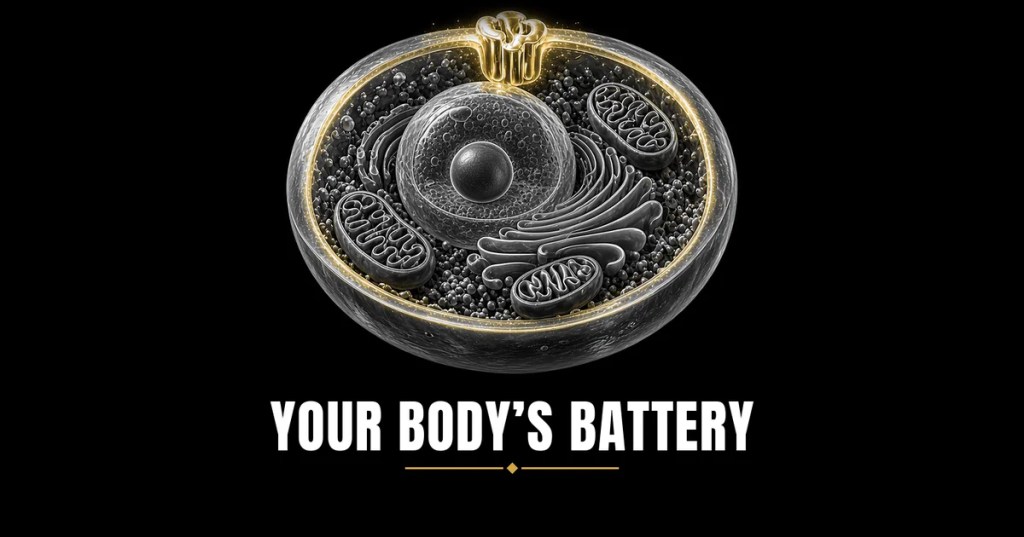
Salt isn’t the villain. The imbalance is. Your cells are tiny batteries. Here’s how they actually run.
Salt doesn’t just season your food. In water, it splits into sodium and chloride ions. Those charged particles let water carry electricity, freeze at a lower temperature, and boil at a higher one.
Your nerves run on the same trick.
Your cells are tiny batteries
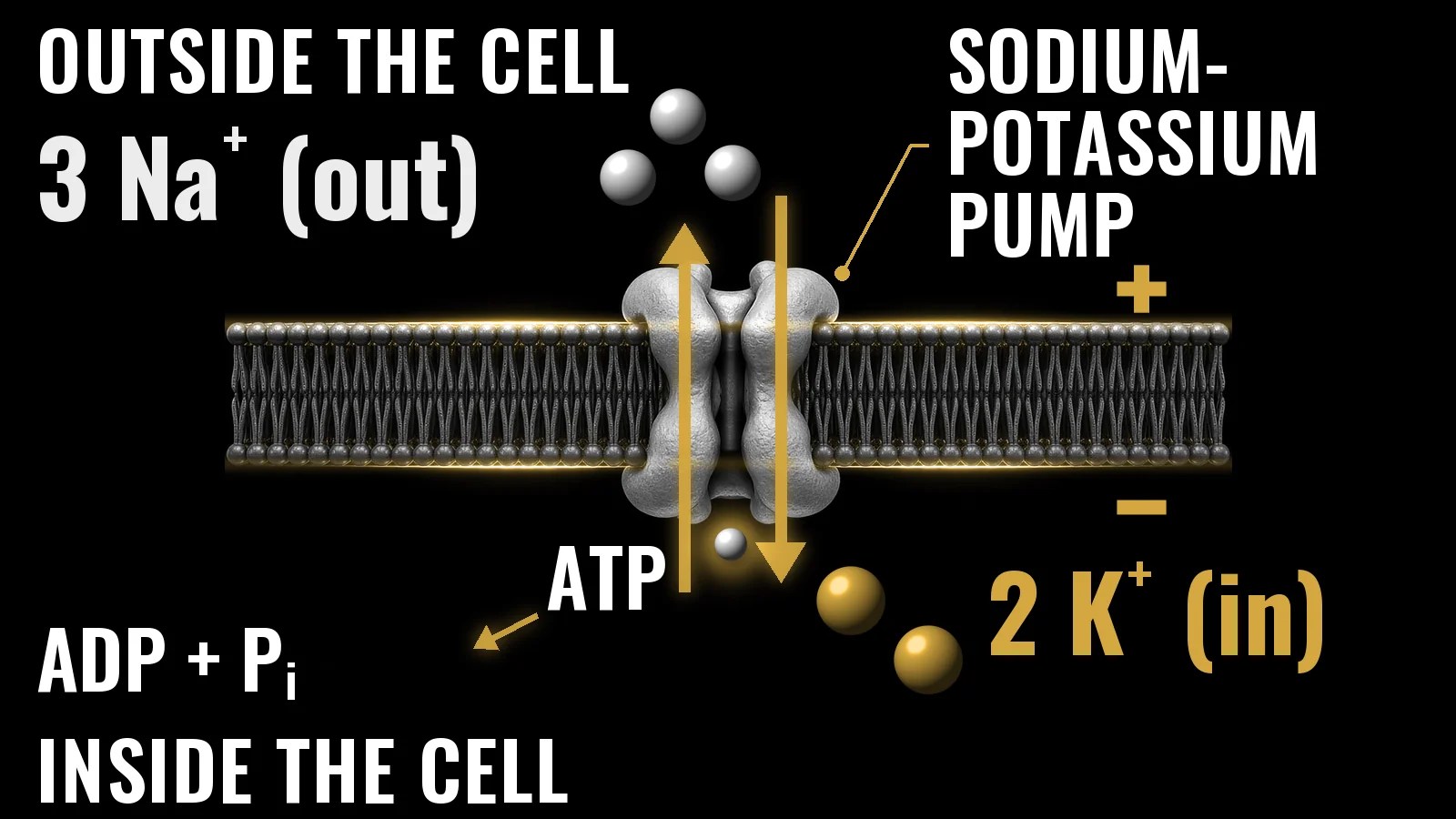
Every cell runs a sodium-potassium pump (Na+/K+ ATPase). It burns ATP, your body’s energy molecule, to push 3 sodium ions out and pull 2 potassium ions in.
That builds a charge across the cell membrane. That charge is what lets nerves fire, muscles contract, and your heart keep its rhythm. Charge in, charge out. That’s the battery.
The ratio matters more than the salt
Most people get plenty of sodium and not enough potassium. The balance matters more than either one alone.
High sodium plus low potassium is linked to higher blood pressure over time. Sodium isn’t the villain. The imbalance is.
Potassium: food first
Most people come up short, and food is the best way to close the gap. Easy sources:
- Baked potato with skin: about 930 mg
- Avocado: about 700 mg
- ½ cup white beans: about 600 mg
- ½ cup cooked spinach: about 420 mg
- Banana: about 420 mg
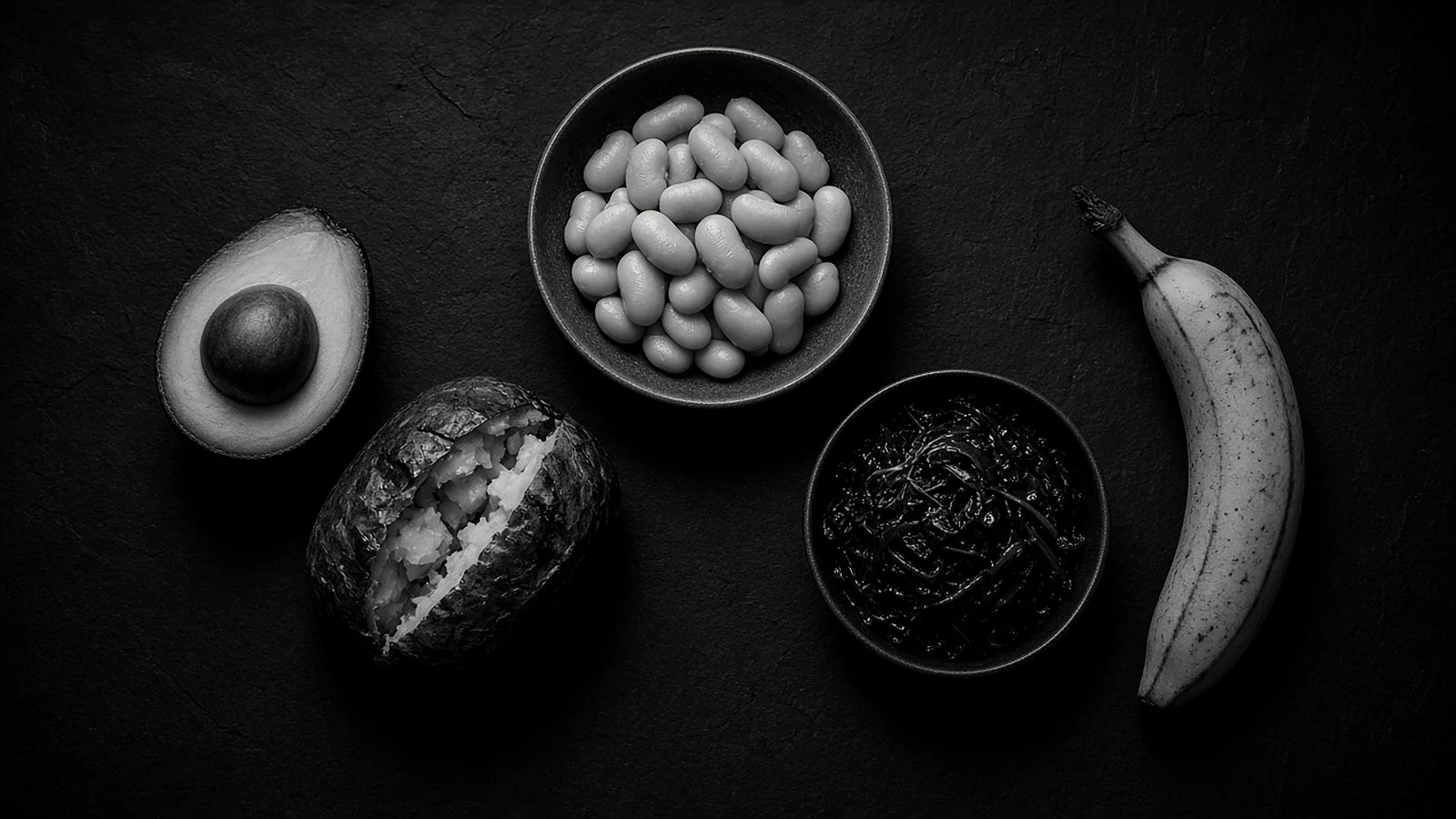
Supplements exist, but over-the-counter pills hold only a small fraction of what one potato does. Eat the food. And check with a doctor before supplementing, especially if you have kidney issues or take blood pressure medication.
Leucine: the muscle switch
Leucine is the amino acid that most strongly flips the “build muscle protein” switch.
Whey protein is the richest source, at about 10 to 12 percent leucine. Eggs, chicken, beef, and fish hold up too.
Magnesium: the quiet cofactor
Most of the ATP in your cells is bound to magnesium. That’s the form your enzymes actually use. Run low on magnesium, and your energy molecule can’t do its job well.
Easy sources: pumpkin seeds, almonds, spinach, dark chocolate. Many people fall short.
Vitamin D: the sunlight hormone
Vitamin D acts more like a hormone than a vitamin. Your skin makes it from sunlight. Low levels are linked to fatigue, weaker muscles, and low mood.
Food barely moves the needle. The practical move is a blood test (25-OH D). Let the test and your doctor guide what you do next.
Sleep: the multiplier
Seven to nine hours is when your body repairs tissue, your brain clears metabolic waste, and the hormones behind energy and recovery reset.
You can eat clean and still run flat on broken sleep.
The stack
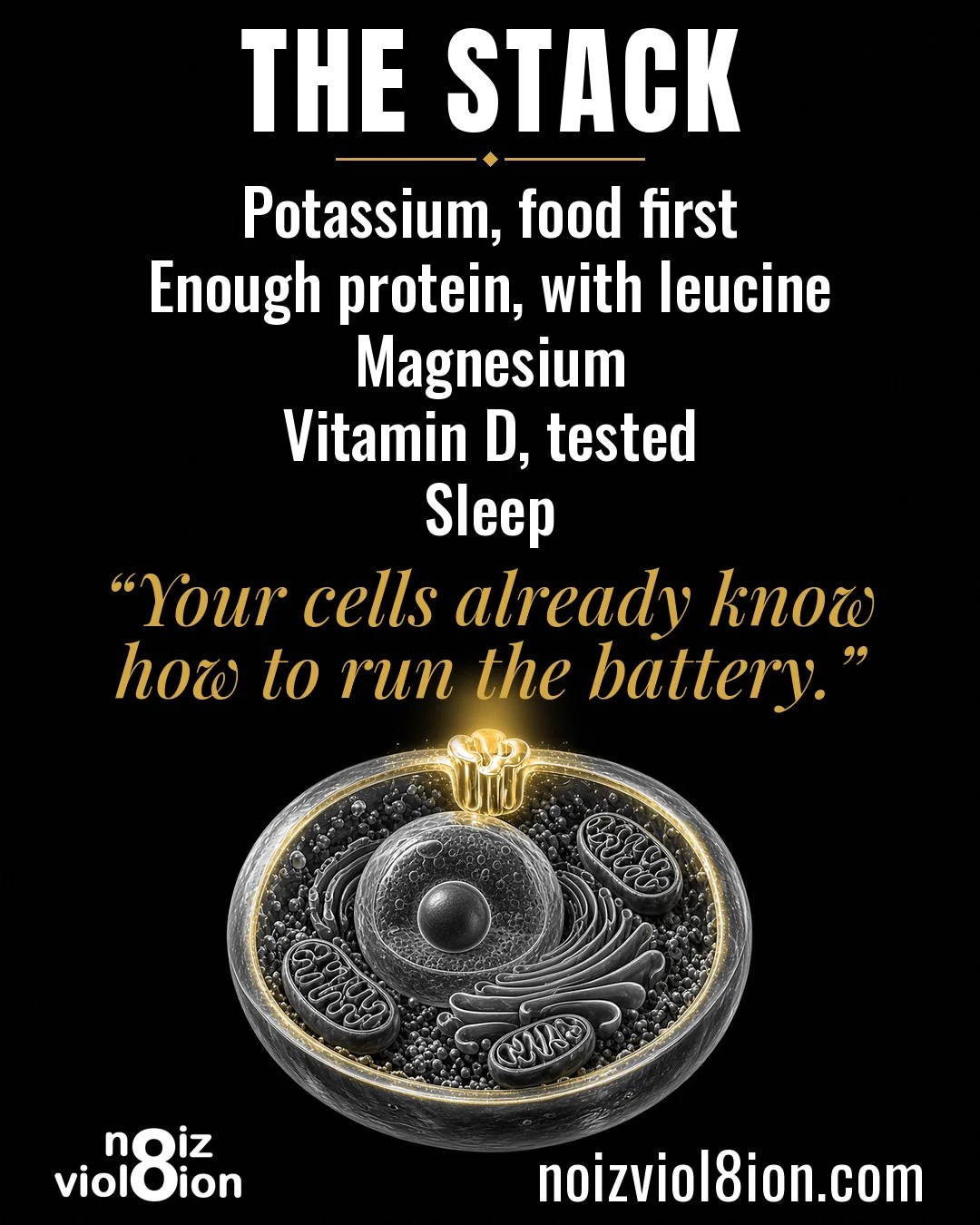
- Potassium, food first
- Enough protein, with leucine
- Magnesium
- Vitamin D, tested
- Sleep
Sodium isn’t the enemy. Too much of it with too little potassium is.
Your cells already know how to run the battery. You just have to stop starving them.
Watch it. Read the original.
This is general information, not medical advice. Talk to your doctor before changing supplements.

